How Personal Style Can Support Everyday Confidence
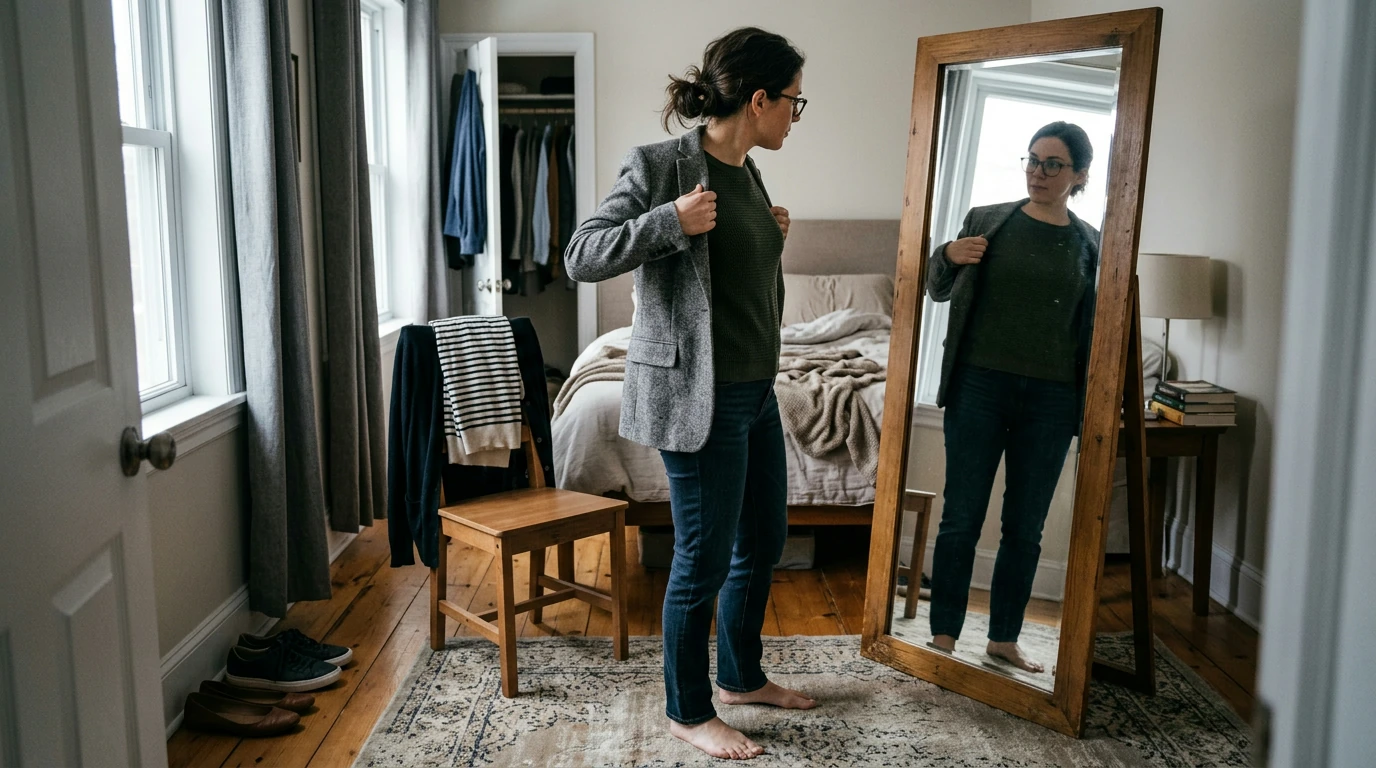
Confidence does not come from owning the right outfit. Still, what you wear can affect how prepared, comfortable, and like yourself you feel as you move through the day. A useful approach to style starts there: not with a perfect wardrobe, but with attention to what helps you participate in your life.
Why style can change how a day feels
Clothes can carry personal meaning. A jacket might remind you that you can handle a difficult meeting. A favorite color might make an ordinary Tuesday feel more like yours. Those associations matter, even when nobody else notices them.
Researchers have used the term “enclothed cognition” to explore how wearing clothing with a particular meaning may affect attention. That research does not establish that a certain outfit will make everyone confident. It does offer a reason to be curious about how your own clothes affect your experience.
Often, the most useful clues are straightforward. Can you sit, walk, and reach comfortably? Are you warm enough? Does the outfit feel familiar, and does it work for what the day asks of you? Feeling at ease may leave you with more attention for the people and tasks in front of you.
Confidence is personal, not a dress code
An imagined standard can make getting dressed feel like a test: polished enough, current enough, impressive enough. Try replacing that test with two questions: “What do I like wearing?” and “What do I need to do today?” Your answers can change from one day to the next without making your style any less valid.
For a quick reflection, name three outfits you felt good wearing. Look beyond how they appeared. Did they let you move freely? Did you feel prepared for the setting? Was there a color, shape, or familiar piece you enjoyed? Write down what the outfits had in common. Those notes may be more useful than a list of items you feel you should buy.
Style is only one part of confidence. It cannot replace self-acceptance, supportive relationships, or appropriate help when distress persists. You do not have to solve a hard feeling by changing your clothes.
A small style experiment for the week ahead
Choose one situation in which you would like to feel more at ease: a meeting, a social outing, or a regular workday. Assemble two outfits using items you already own. Rather than deciding which looks more impressive, compare how each feels to wear and how well it supports your plans.
Use this check-in before you leave and after you return. A brief note is enough. Look for patterns across several days; one awkward or excellent day is not a final verdict on an outfit.
| Question | What to notice | Possible adjustment |
|---|---|---|
| Can I move comfortably? | Fit, fabric, shoes, and temperature | Swap one restrictive item |
| Does this feel like me? | Colors, shapes, or details I enjoy wearing | Add one familiar piece |
| Does it suit my plans? | The setting and what I need to do | Choose a more practical layer or shoe |
| How do I feel afterward? | Ease, distraction, or self-consciousness | Keep what worked; change what did not |
If both outfits work, you have gained options. If neither does, change one element at a time. A different shoe or layer may tell you more than replacing the whole outfit.
Make the ideas easier to revisit
If you want structured prompts, our Understanding the Confidence Power of Style digital bundle brings together ten fashion-psychology, confidence, and style resources in eBook and checklist formats. You do not need to work through everything at once. Start with the topic closest to a current challenge, try one idea in daily life, and use a checklist to note what was useful.
The bundle is an option, not a requirement for the experiment above. At $472.99, it is worth considering whether that format and cost suit your budget and how often you expect to use the resources. You can begin with a note on your phone and the clothes in your closet.
If you would rather focus on an internal practice alongside your style check-ins, our Meditations for Self-Love & Worthiness audio course offers guided meditations and affirmations. It addresses a different part of the experience; neither resource promises an instant change in how you feel.
Build a repeatable routine, not a perfect wardrobe
Once you notice what works, save a few dependable combinations for days when decisions feel tiring. You might keep a note describing each outfit and the setting where it felt useful. That makes getting dressed easier without turning your choices into rigid rules.
Revisit those combinations as seasons, responsibilities, preferences, and bodies change. Something that served you well last year may need an adjustment now. Our team favors a routine you can revise over a standard you have to maintain. The most helpful style choices are the ones that make it easier for you to participate in life as yourself.
FAQ
Can changing my clothes really make me more confident?
Clothes may affect how comfortable or prepared you feel, but the effect varies by person and situation. Try small changes and pay attention to your experience rather than expecting an instant result.
Do I need to buy a new wardrobe to develop my style?
No. Start with what already feels comfortable and authentic, then make useful combinations from items you own.
How should I use a confidence and style digital bundle?
Choose one relevant guide or checklist, try one suggestion for a week, and keep only the practices that genuinely help you.







Leave a comment