New Puppy Training: A Gentle 4-Week Starter Plan
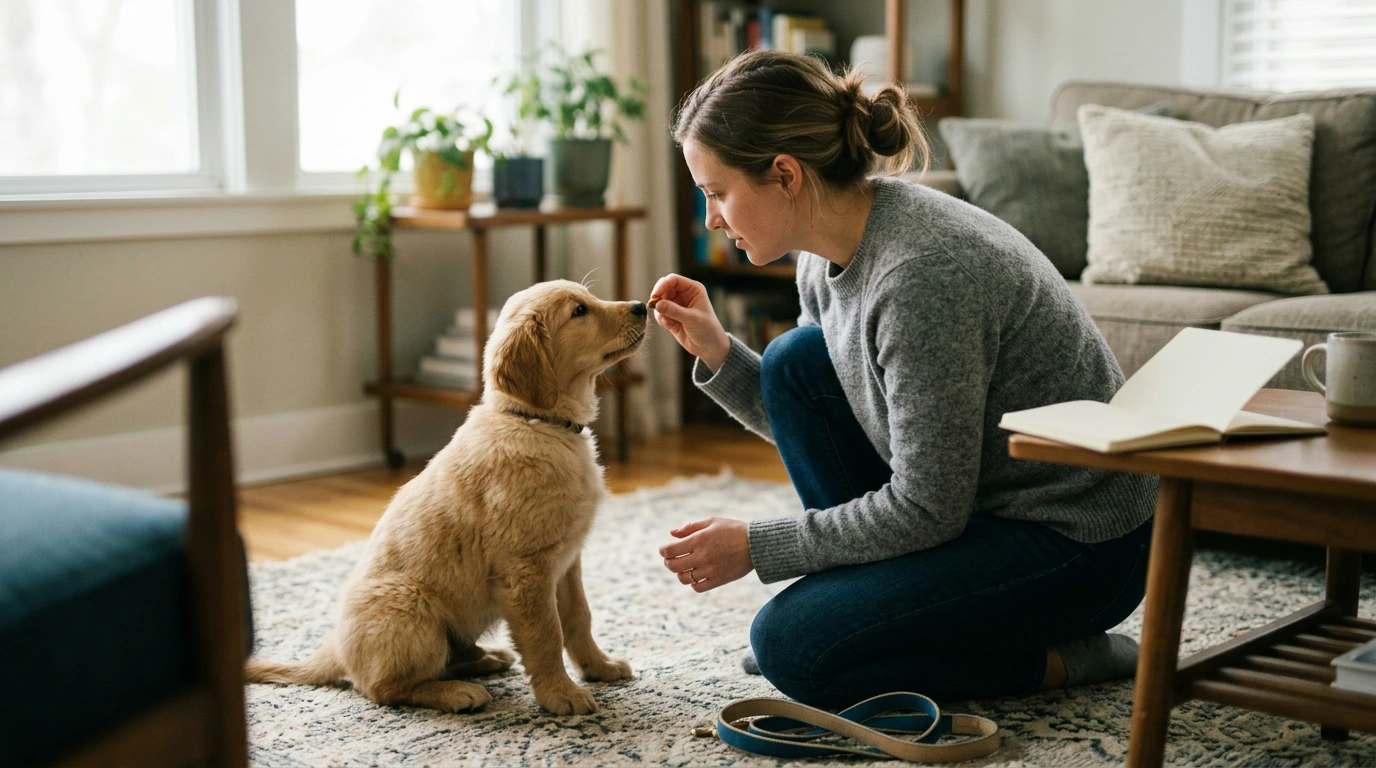
Bringing home a puppy is exciting, but deciding what to teach first can feel overwhelming. You do not need to tackle every command at once. Start with a predictable day, reward the behaviors you want to see again, and practice new skills in small steps. Our printable New Puppy Training Starter Guide brings those priorities together in a four-week format you can adapt as your puppy grows.
Start with safety, trust, and a potty routine
What should you teach first? Establish where and when your puppy should potty, while also rewarding them for responding to their name. These two habits create a foundation for the rest of your training: your puppy gets regular chances to succeed, and you begin building a reliable way to get their attention.
Take your puppy to an appropriate potty spot after waking, meals, play, and naps. When they finish in the right place, praise and reward them right away so the connection is clear. Keep a close eye on them indoors, especially during transitions between activities. If an accident happens, clean it up calmly and offer another potty opportunity. Punishment does not teach your puppy where to go.
Progress will not look identical for every puppy. If accidents continue, revisit your timing and supervision rather than assuming your puppy is being stubborn. The Humane Society’s house-training guidance offers additional help with building a consistent routine.
A four-week plan you can adapt
Use the weeks below as a progression, not a deadline. A puppy who needs more time with one skill can keep practicing it while you introduce the next in a simple, low-pressure way. Aim for several brief, upbeat sessions across the day, with plenty of breaks for sleep, play, meals, and normal puppy care.
| Week | Main focus | Small daily practice |
|---|---|---|
| 1 | Settle in and establish a potty routine | Reward potty trips, name recognition, and calm check-ins. |
| 2 | Build simple cues | Practice sit and come in a quiet space; reward each successful response. |
| 3 | Add everyday manners | Introduce the leash briefly and reward calm behavior around household activity. |
| 4 | Gently broaden experiences | Revisit familiar cues in new settings and arrange positive, manageable introductions. |
You can make the plan easier to follow by choosing one or two practice moments you already have, such as after a potty trip or before a meal. That is often more manageable than trying to set aside one long training block.
Teach commands one small success at a time
Begin a new cue in a quiet place where your puppy can pay attention. Say their name once; when they turn toward you, praise or mark the moment and reward promptly. For sit, reward when their bottom reaches the floor. For come, start at a short distance and make reaching you worthwhile. Keep each attempt clear, then pause before trying again.
Name response, coming when called, and sitting are useful beginner skills because you can practice them in ordinary moments. Once your puppy succeeds reliably in a quiet room, add distractions gradually. If they cannot focus, move farther from the distraction or return to an easier version instead of repeating the cue over and over.
If either of you gets frustrated, lower the difficulty and finish with a success. Our goal is to help you build a puppy who is willing to try again, not to squeeze one more repetition out of a tiring session.
Make socialization positive, not overwhelming
Socialization means helping your puppy have pleasant experiences with appropriate people, sounds, surfaces, and environments. It does not mean they must greet every person or dog they encounter. A calm moment observing something new from a comfortable distance can be valuable practice.
Watch your puppy’s body language. If they seem hesitant or overwhelmed, give them more distance or take a break. Choose a few manageable experiences each week, then leave room for rest afterward. Before vaccinations are complete, ask your veterinarian which types of exposure are safe for your puppy and your area. The American Veterinary Society of Animal Behavior’s position statements provide further context on early behavior and socialization.
Keep the routine where you’ll use it
Our New Puppy Training Starter Guide is a printable eBook for beginners covering a four-week puppy routine, house-training, commands, and socialization. Keep a printed copy near the door or another convenient spot so everyone in your household can follow the same approach to potty trips and rewards.
If you prefer to record your own daily goals alongside the puppy routine, our printable Goal-Setting Guide for Real Results is a separate planning option. You do not need another system to get started, though: a few notes about what worked today can help your team stay consistent tomorrow.
Use the puppy guide as a starting framework, then adjust the pace to your puppy’s needs. A calm routine and many small successes are more useful than racing to finish week four.
FAQ
What is the first thing I should train my new puppy?
Begin with a consistent potty routine and reward your puppy for responding to their name. Both habits support the training that follows.
How long should a puppy training session be?
Keep sessions brief and positive, stopping while your puppy is still engaged. Several small opportunities throughout the day are easier to fit into a routine.
What if my puppy has a house-training accident?
Clean it up calmly, supervise more closely, and offer another potty opportunity. Reward success in the right spot rather than punishing mistakes.







Leave a comment