Helping Pets Handle Vacuum Stress: A Calm Cleaning Plan
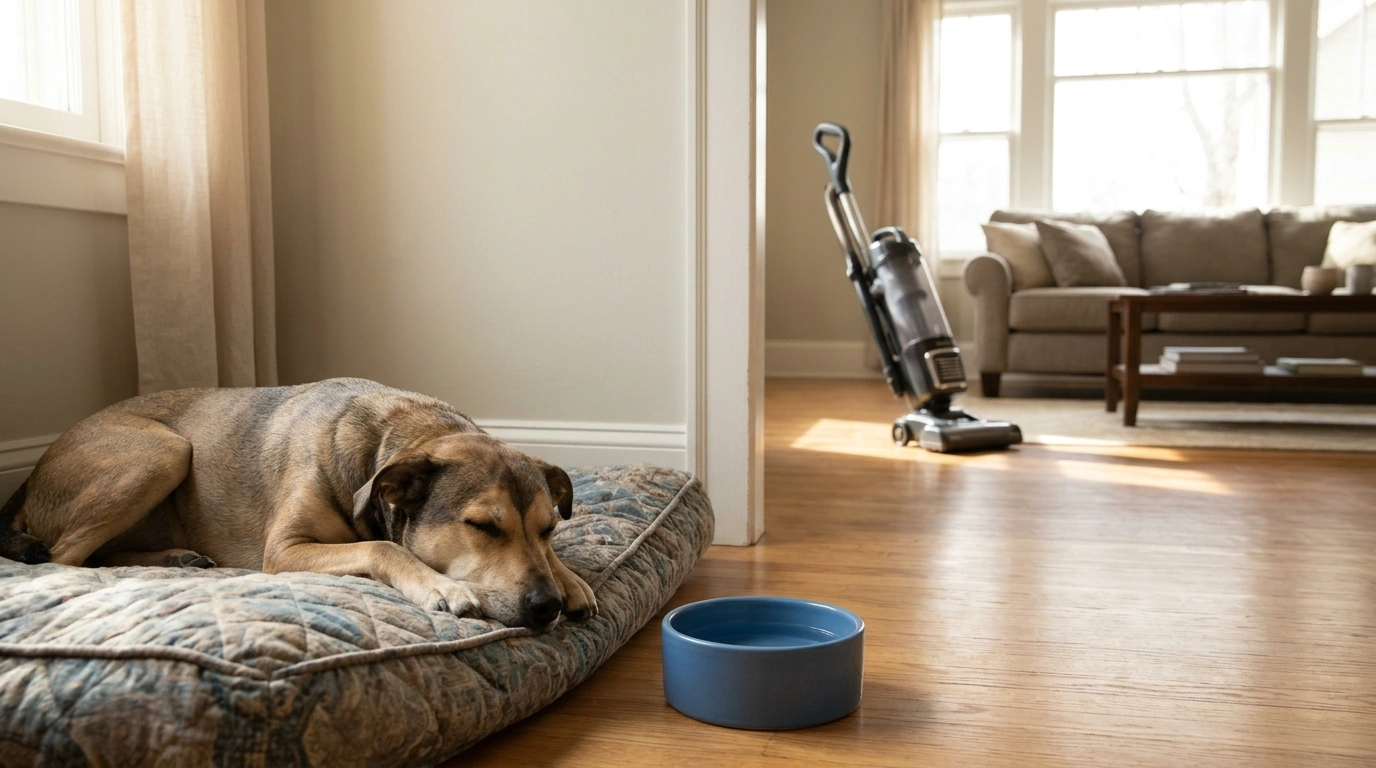
A vacuum can turn an ordinary cleaning day into a stressful one for a pet. We recommend making the routine predictable: prepare a place your pet can leave for, introduce the vacuum in small steps, and let their behavior determine what happens next. The goal is not to have your pet stand beside a running machine. It is to find a way to clean while giving them enough distance and choice to cope.
Notice What Your Pet Is Telling You
Retreating, trembling, hiding, barking, and refusing a normally welcome treat can all signal discomfort. Some pets react to the sound, others to the vacuum’s movement, and some to both. Notice when your pet’s reaction begins. Do they leave as soon as you take the vacuum out, when you roll it across the floor, or only when you switch it on? That moment gives you a starting point for gentler practice.
Watch for quieter signs, too. A pet who freezes, keeps looking for an exit, or cannot return to a familiar activity may need more space. If you are unsure whether they are comfortable, make the next step easier rather than testing how much they will tolerate.
Match the Next Step to Your Pet’s Response
| What you notice | What to try next |
|---|---|
| Your pet stays relaxed when the vacuum is stored | Begin with the vacuum visible but switched off. |
| Your pet leaves when the vacuum moves | Keep it still for now and practice from farther away. |
| Your pet reacts when the motor starts | Run it briefly in another room while your pet has space to retreat. |
| Your pet remains distressed or cannot settle | Stop the exercise and ask a veterinarian or qualified behavior professional for guidance. |
Set Up a Quiet Place Before Cleaning
Before you bring out the vacuum, prepare a separate room or another comfortable retreat with familiar bedding and water. Give your pet time to go there on their own. You can leave the route open and make sure they can move farther from the noise if they need to. Do not hold a pet near the vacuum, chase them with it, or block an escape route.
When practical, clean rooms farther from your pet’s retreat first. This gives them time and distance while the machine runs. If another household member can stay with your pet and your pet welcomes their company, that may help keep the routine familiar. If your pet prefers to be left alone, respect that choice. A retreat works best when it remains a place they can use without being pulled out to meet the vacuum.
Introduce the Vacuum in Small, Manageable Steps
Practice outside of a full cleaning session, when you have time to stop. First, place the switched-off vacuum where your pet can see it from a comfortable distance. Once they can remain relaxed, try moving it briefly without turning it on. Later, try a short burst of sound from farther away, with your pet free to leave. These are separate steps; there is no need to complete them in one day.
You can pair an easy step with a treat or play if your pet is relaxed enough to participate. Do not use a treat to coax them closer than they want to go. Keep sessions short and finish before distress builds. If your pet backs away, stops engaging, or cannot settle afterward, return to an easier step next time. Progress may vary from day to day, and pushing through fear is not the aim.
Our team would also avoid practicing with the vacuum pointed toward your pet. Let them observe from a distance while the machine stays still or moves away from them. That arrangement gives you a clearer view of their response without making an approach feel unavoidable.
Make the Routine Work on Cleaning Day
If you want an additional resource focused on this routine, we offer Helping Pets Handle Vacuum Stress. It is an optional companion to watching your pet’s responses and adjusting your cleaning plan, not a reason to continue a practice session when your pet is frightened.
Planning your own day can make it easier to set aside a brief, unhurried practice session. Our Healthy Meal Plan & Recipe Collection is a separate resource for human meals; it is not pet behavior guidance. Whatever else is on your schedule, give yourself permission to pause the vacuum routine when your pet needs a break.
Know When to Ask for Help
Speak with a veterinarian if your pet’s fear is intense, getting worse, begins suddenly, or comes with other changes in behavior. A veterinarian can help you consider whether something beyond the cleaning routine needs attention. If gradual home practice is not enough, a qualified behavior professional can help you build a plan suited to your pet and your home. The ASPCA’s behavioral help guidance is another place to learn about finding support. No single method works for every pet, and asking for help is a reasonable next step.
FAQ
Should I let my pet hide while I vacuum?
Yes. A safe place to retreat can help your pet cope. Do not pull them out or force them to approach the vacuum.
How long does it take for a pet to get used to a vacuum?
There is no set timeline. Practice in short sessions at a level your pet can handle, and step back if they show distress.
What if my pet is still frightened despite gradual practice?
Keep using distance and a quiet retreat, and consult a veterinarian or qualified behavior professional for an individualized plan.







Leave a comment